Investing.com

  • Academy Center
  • Markets
  • News
  • Analysis
  • Charts
  • Technical
  • Tools
  • Watchlist
  • Webinars
  • InvestingPro
      Academy
      • Stocks
      • Crypto
      • Trading
      • ETFs
      • Currencies
      • Analysis
      • Statistics
      • Stock Picks
      • Financial Terms
      • Global Stock Picks
      • InvestingPro 101
      • Tools

      Table of contents

      • Why Does Berkshire Hathaway Have Two Share Classes?
      • Key Differences Between BRK.A and BRK.B Shares
      • Investment Strategy: Which Berkshire Hathaway Share Class is Right for You?
      • Berkshire Hathaway Share FAQs

      Academy Center > Stock Picks

      Stock Picks Beginner

      Berkshire Hathaway Class A vs. Class B: Understanding the Differences

      written by
      Hannah Wilson
      arrow-top

      English Markets Specialist at Investing.com (SEO)

      BA (Hons) Business (1st) University of Coventry, England

      • linkedin logo
      • twitter logo
      See Full Bio
      | Edited by
      Rachael Rajan
      arrow-top

      Financial Markets Copyeditor - Investing.com

      Rachael has a Bachelor’s degree in mass media from Wilson College, Mumbai and a Master’s degree in English from Pune University.

      • linkedin logo
      See Full Bio
      | updated September 30, 2025

      For investors interested in owning a piece of a legendary company like Berkshire Hathaway, the choice often comes down to two different share classes: Class A (BRK.A) and Class B (BRK.B). Both represent ownership in the same business, but they come with important distinctions in price, voting rights, and liquidity that are crucial for individual investors to understand.

      Why Does Berkshire Hathaway Have Two Share Classes?

      The story of Berkshire Hathaway’s two share classes is a testament to its unique culture and the vision of Warren Buffett. For many years, Berkshire Hathaway had only its highly priced Class A shares. The steep price per share, often in the hundreds of thousands of dollars, was a deliberate strategy by Buffett to attract long term, value oriented investors. The high price acted as a filter, discouraging short term speculation.

      However, as the company’s success grew, so did the share price, making it inaccessible to most individual investors. In 1996, to address the demand from smaller investors, Buffett introduced the Class B shares. This new class offered a more affordable entry point while preserving the original Class A share structure. A key event in their history was the 2010 stock split of the Class B shares, which further increased their accessibility.

      Key Differences Between BRK.A and BRK.B Shares

      While both classes represent ownership in the same underlying company, they are not identical. Think of it like buying different models of the same car: they both get you where you need to go, but one might have more features and a higher price tag.

      1. Price and Accessibility

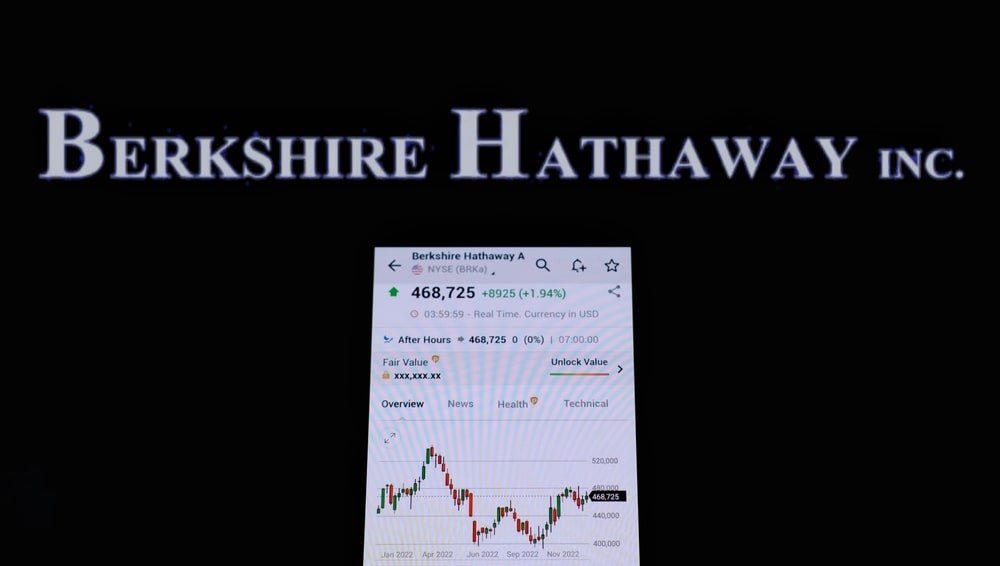
      This is the most obvious difference. The Class A shares (BRK.A) are famous for having the highest per share price of any public company in the world. A single share can cost hundreds of thousands of dollars. In contrast, the Class B shares (BRK.B) are priced at a much lower level, making them accessible to a far wider range of investors. This accessibility is the primary reason the Class B shares were created.

      2. Voting Rights

      This is where the true power dynamic lies. A single Class A share carries significantly more voting power than a Class B share. Each Class B share has just one ten thousandth (1/10,000) of the voting rights of a Class A share. This difference is largely symbolic for most individual investors who hold a few shares, but it’s a critical factor for large shareholders seeking to influence the company’s direction.

      3. Conversion

      Here’s another important distinction. Class A shares can be converted into Class B shares at any time. This conversion is a one way street. You cannot convert your Class B shares into Class A shares. The conversion feature for Class A shares can be useful for estate planning or for shareholders who need to sell only a portion of their holdings.

      Compare the two stocks using InvestingPro:

      Investment Strategy: Which Berkshire Hathaway Share Class is Right for You?

      So, which share class is the right choice for your investment strategy?

      • When to Consider BRK.B Shares: For most individual investors, the Class B shares are the logical and practical choice. They provide the same economic exposure to Berkshire Hathaway’s diverse portfolio of businesses and stocks. You get to own a part of the company and benefit from its long term performance without the prohibitive price tag. The lower price also offers greater flexibility for building a position or selling a small portion of your holdings.
      • When to Consider BRK.A Shares: The Class A shares are typically for investors with a large amount of capital who either want the enhanced voting power or who align with Warren Buffett’s philosophy of holding for the very long term. These shares are often held by institutional investors or high net worth individuals. For the average investor, the advantages of Class A shares are generally outweighed by their massive price and lack of flexibility.

      Ultimately, the decision between Berkshire Hathaway’s Class A and Class B shares depends on your financial situation and investment goals. Regardless of which class you choose, you are investing in the same fundamental business. The performance of both share classes is inextricably linked to the success of the underlying company.

      Berkshire Hathaway Share FAQs

      1. Has Berkshire Hathaway ever split its stock?

      Warren Buffett has famously and consistently refused to split the Class A shares (BRK.A). However, the Class B shares (BRK.B) did undergo a 50 for 1 stock split in 2010. This was done to make the shares more affordable for the general public and to facilitate a major acquisition.

      2. What is the relationship between the prices of BRK.A and BRK.B?

      The Class B share price is designed to be approximately 1/1,500th of the Class A share price. This ratio is maintained through a process called arbitrage. Since Class A shares can be converted into 1,500 Class B shares, if the price ratio deviates, investors will exploit the difference, which in turn brings the prices back into alignment.

      3. Can I convert Class B shares into Class A shares?

      No, the conversion is a one way street. You can convert one Class A share into 1,500 Class B shares at any time, but you cannot convert Class B shares into Class A shares.

      4. Do both BRK.A and BRK.B share classes receive dividends?

      No. Berkshire Hathaway does not pay a dividend on either its Class A or Class B shares. This is a deliberate strategy by Warren Buffett and the board to reinvest all earnings back into the company, which they believe generates a higher return for shareholders over time.

      • Related
      • Recent
        Best 5 Penny Stocks With Great Financial Health (April 2026)
        Best AI Mega-Cap Stocks For 2026
        Best Blue Chip Stocks (March 2026)
        Best Cheap Stocks Under $10 with High Return Potential (April 2026)
        Best High Yield Dividend Stocks (March 2026)
        Best Large-Cap Growth Stocks (April 2026)
        Blog header image showing two person-miniatures each sitting on a stack of money with the blog title on the right
        Best Stock Comparison Tools (2026)
        Blog header image showing a trader on their phone with a candlestick chart up on a laptop in the background with the blog title on the right
        Best Stock Picking Tools (2026)
        Best Tech Stocks in March 2026
        Best Undervalued Stocks To Buy Right Now (April 2026)
        How to Evaluate Water Stocks: A Complete Investment Guide
        How to Evaluate Water Stocks: A Complete Investment Guide
        A photograph of a waterfall in the evening emptying into a serene lake with the title "Cash Flow Coverage Ratio" written to the right
        What is the Cash Flow Coverage Ratio? The Ultimate Reality Check for Investors
        An open metal case filled with dollar bills with the blog title "What Is Price to Free Cash Flow Ratio" written to the right
        What is Price to Free Cash Flow Ratio? The Investor’s Ultimate Lie Detector
        How to Value Energy Storage Stocks
        A 'dark mode' stock chart on a tablet with an analog calculator to the left and a jar of M&Ms to the back, with the blog title "How To Use Relative Valuation Methods" written on the right
        How to Use Relative Valuation Methods: A Masterclass for Modern Investors
        An ipad lying on a table with a stylus next to it, showing a green stock volume chart with the blog title "Volume Spikes and Stock Moves" written next to it
        Volume Spikes and Stock Moves: What They Mean for Your Portfolio
        A laptop against a white background with app logos breaking out of the screen, with the blog title "How To Evaluate Software Stocks" written on the right
        How to Evaluate Software Stocks: A Guide for Smart Investors
        PoV of a person holding a TV remote with a tv in the background showing a screen full of different streaming services, with the blog title "How To Evaluate Streaming Stocks" written on the right
        How to Evaluate Streaming Service Stocks: A Guide for Smart Investors
        A $100 bill in a mousetrap placed on a wooden floor, with the blog title "Value Trap Definition" written on the right
        What Is A Value Trap: How to Spot and Avoid the Ultimate Investing Mirage

      Recent Articles

      Top 10 Stocks for 2026: Live Expert Analysis & Free Stock List

      While most investors chase the last AI winners of 2025, smart money is quietly rotating into completely different opportunities for 2026. The next 30 days

      Nvidia vs AMD: Stock Comparison

      Investing in technology stocks requires understanding not just current performance metrics but the fundamental strengths, market positioning, and long term potential of companies. When considering

      Nvidia vs Broadcom Stock Comparison

      When navigating the semiconductor industry for investment opportunities, Nvidia and Broadcom often emerge as leading contenders for investor portfolios. Both companies represent significant forces in

      Best AI Mega-Cap Stocks For 2026

      The stock market is filled with companies leveraging AI. It’s the current darling of business growth from the biggest companies in the world down to


      Install Our Apps

      Scan the QR code or install from the link

      www.facebook.comApp Store www.twitter.comGoogle Play

      cl.ottergoldmedia.info
      • Blog
      • Mobile
      • Portfolio
      • Widgets
      • About Us
      • Advertise
      • Help & Support
      • Authors
      Investing.com
      www.facebook.com www.twitter.com

      Risk Disclosure: Please be fully informed regarding the risks and costs associated with trading the financial markets, it is one of the riskiest investment forms possible. Currency trading on margin involves high risk, and is not suitable for all investors. Before deciding to trade foreign exchange or any other financial instrument you should carefully consider your investment objectives, level of experience, and risk appetite. Fusion Media may be compensated by the advertisers that appear on the website, based on your interaction with the advertisements or advertisers.

      Fusion Media does not endorse any product or service and does not assume any liability regarding your interaction with any third party displayed on this site, including the nature, quality, supply or fitness for a particular purpose of the product or service, or any damage caused as a result of the use of such product or service.


      © 2007-2026 Fusion Media Limited. All Rights Reserved
      • Terms And Conditions
      • Privacy Policy
      • Risk Warning
      • Cookie Preferences